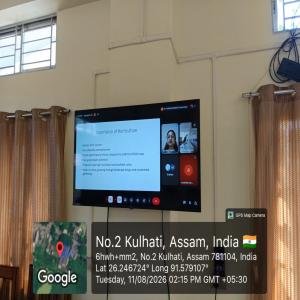
Minutes of the One-day seminar on “Horticulture and
Indian Economy”
Organised by IIC, Damdama College
Resource person: Dr.AnganaBaruah
Date: 11/08/2026
Venue: Conference hall
Time: 2 pm
The
Institution’s Innovation Cell (IIC), Damdama College, organised a one-day
seminar on “Horticulture and Indian
Economy” on 11th August 2026 at 2 pm. The seminar was
organised with the objective of creating awareness among students and faculty
members about the significance of horticulture in the Indian economy and its
potential for employment generation, entrepreneurship, rural development and
sustainable economic growth.
The
programme commenced with a welcome address by Dr.AnubhabSarmah, coordinator, RD
innovation cell, Damdama College, who briefly outlined the objectives and
significance of organising the seminar. The speaker highlighted the importance
of encouraging students to explore emerging opportunities in agriculture and
allied sectors.
The
invited resource person, Dr.AnganaBaruah,
delivered an insightful lecture on the theme “Horticulture and Indian Economy.” In her address, Dr.Baruah
discussed the contribution of horticulture to the Indian agricultural sector
and its growing importance in strengthening rural livelihoods and the national
economy. She elaborated on the economic potential of fruits, vegetables,
spices, plantation crops, flowers and other horticultural products.
Dr.Baruah
also highlighted the role of horticulture in employment generation, income diversification, entrepreneurship and rural
development. She explained how technological advancement, improved
cultivation practices, post-harvest management, food processing, market
linkages and value addition can enhance the economic returns from horticultural
activities.
The
resource person further discussed the challenges faced by the horticulture
sector, including inadequate storage and transportation facilities,
post-harvest losses, market fluctuations, lack of adequate processing
facilities and difficulties faced by small and marginal producers. She
emphasised the need for innovation, modern technology and stronger
institutional support to make the sector more productive and sustainable.
The
session was interactive, and students actively participated in the discussion
and raised questions regarding opportunities in horticulture, entrepreneurship,
marketing and the role of young people in developing the sector. Dr.Baruah
responded to the queries and encouraged the students to consider horticulture
and allied activities as potential avenues for innovation and livelihood
generation.
The
seminar provided participants with valuable insights into the relationship
between horticulture and economic development and helped broaden their
understanding of the opportunities and challenges associated with the sector.
The
programme concluded with a vote of
thanks delivered by Dr.AnubhabSarmah, expressing gratitude to the resource
person, the Principal, faculty members, students and all those involved in
organising the seminar.
Outcomes:
The seminar concluded successfully with active
participation from the students and faculty members.